
Pike County Traffic Warrants Explained
Think of a traffic warrant as a court-record question. In Pike County it usually follows a missed setting or a broken court order. It is not a driving-history report or an insurance product. The court that issued it decides whether the file holds a warrant, a failure-to-appear notation, a balance, or a new hearing date.
Which Pike County Court Received the Ticket
Where was the ticket written? That decides the route. Pike County Justice Court takes cases from the Mississippi Highway Patrol, the Sheriff's Office, the Public Service Commission, MDOT, and MDWFP, along with DUI and misdemeanor matters. Each municipal court keeps its own city traffic and ordinance cases. A stop inside city limits does not always mean a municipal file, so read the issuing agency and court printed on the ticket.
The pictured official source helps identify the public channel and its limits.
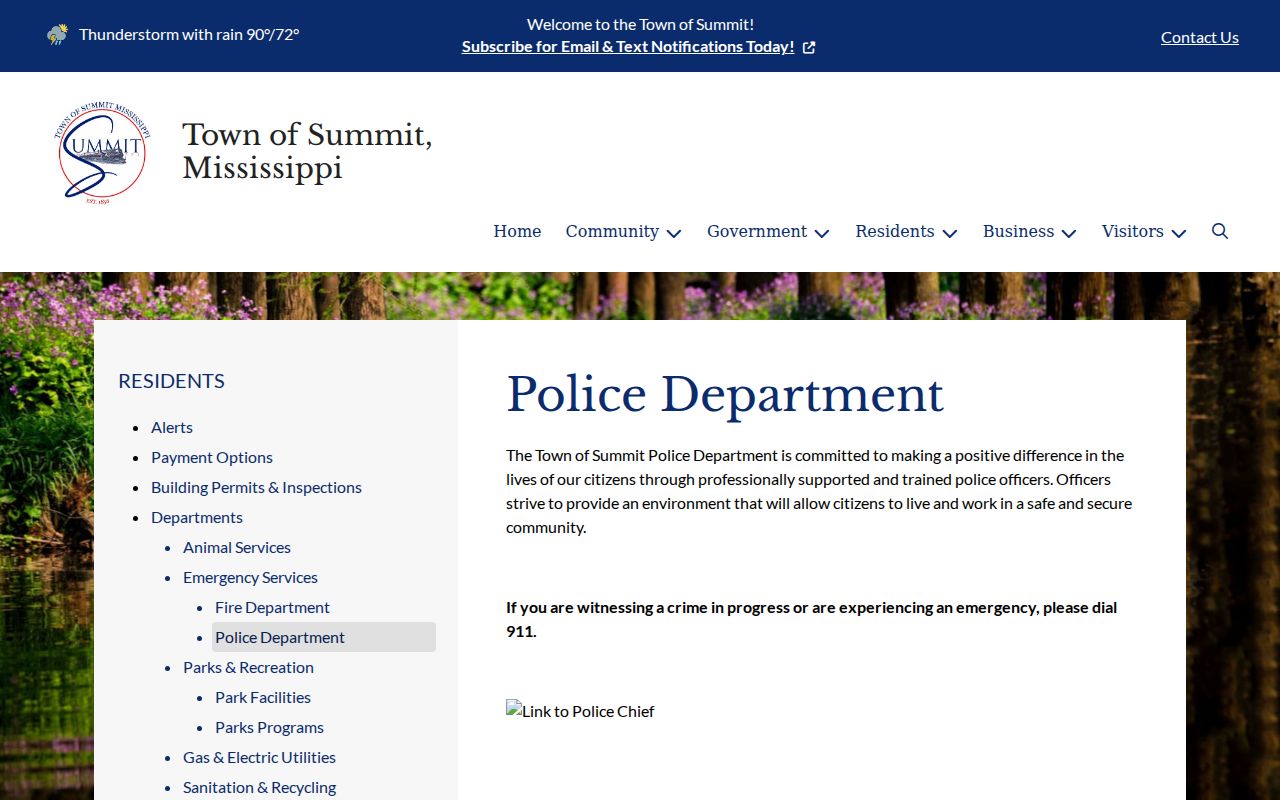
Confirm current details with the office before acting.
Checking for a Pike County Traffic Warrant
The county's citation system offers no visible name, date-of-birth, citation-number, or status fields for a public search. Calling the clerk is the safe method. Ask which identifier is needed, whether the case sits in that court, whether an active warrant exists, and what the judge requires next. Keep personal identifiers away from unverified public forms.
| Question | Best source |
|---|---|
| Court status | Issuing clerk |
| Service or agency entry | Entering agency |
| Police record | Generating department |
Three Justice Court Districts Handle County Tickets
Northern, Central, and Southern districts all share the Pike County Justice Court office at 2109 Jesse Hall Memorial Road in Magnolia, phone (601) 783-5333. Your district still matters. Bring the ticket, issuing agency, date, and citation number, and confirm office hours before you travel.
Inside a Pike County Traffic Warrant Record
A Pike County traffic file can carry the issuing court, citation or cause number, alleged offense, scheduled date, failure-to-appear notation, warrant type, balance, and current status. Fields vary by court. Ask the clerk whether a payment entry and a warrant entry are separate, and which document shows the judge actually acted.
Summit Lists Traffic and Parking Jurisdiction
Summit Municipal Court expressly covers parking, traffic, town ordinance, and certain misdemeanor matters. It sits at 706 West Railroad Avenue and shares the (601) 276-9511 contact family with local police. The town publishes no online warrant or payment form. Check a Summit citation with the municipal clerk, not a generic Pike County sheriff search.
How to Pay or Lift a Pike County Traffic Warrant
Ask the court directly. Does it accept payment, set a new date, require a judge appearance, or need something else? Never assume payment alone recalls a warrant. Pike County posts no universal lift fee, reinstatement fee, amnesty offer, or online recall form. Get a receipt and confirm the docket status once the clerk posts the action.
Verify directly: a public page is a starting point, while the court or agency holding the record supplies the current answer.
McComb Missed-Court Language Is Local
McComb Court Services uses the label Bench Warrant for missed court and Contempt Warrant for nonpayment or noncompliance. Its official page discusses payment and possible license consequences. Those words belong to McComb. Magnolia, Summit, Osyka, and Pike County Justice Court each explain their own process.
Pike County Traffic Warrants and License Holds
A court failure-to-appear and an administrative license consequence can be linked, but they stay separate records. Ask whether the court notifies another state office, what proof it issues, and whether an extra step falls on you. No Pike County rule sets an automatic hold or a fixed clearance fee.
Keep Proof After the Pike County Court Acts
Keep everything: the citation, the receipt, the new date, any judge's order, and written clerk confirmation. Ask whether the Pike County warrant was recalled, quashed, satisfied, or still pending, and whether a service agency must update its system. If instructions are unclear, consult counsel. A listing vanishing from a website is not a signed court action.